Why is There No “Universal” Flood Water Barrier?
In recent years, flooding has become increasingly frequent around the world. According to several public studies and urban flood risk assessments, many coastal and riverside cities are expected to face higher flood risks in the coming decades. Some studies suggest that without effective protection measures, floods could cause billions of dollars in damage to cities and communities by 2050.
For many homes and businesses, floodwater does not need to be very deep to cause serious damage. In fact, just one inch (about 2.5 cm) of water can lead to tens of thousands of dollars in repair costs, including damage to flooring, walls, electrical systems, and stored goods.
When looking for flood protection solutions, many people hope to find a “universal” product—something that works everywhere and in every flooding situation. However, the reality is that no single flood barrier can suit every environment. Flooding conditions vary greatly depending on location. Some floods come from rising rivers, some from heavy rainfall and surface runoff, and others from coastal storm surges. These situations differ in water height, duration, and water pressure.
Therefore, an effective flood protection solution should be chosen based on building structure, geographic location, and the type of flood risk. For example, a removable flood barrier may be suitable for a residential doorway, while a warehouse or commercial entrance may require a stronger and more robust flood protection system. In other words, flood protection is not simply about choosing a product—it is about developing the right protection strategy.
Step 1 . Assess Your Flood Risk to Choose the Right Flood Water Barrier
Before selecting a flood water barrier, the most important step is not purchasing a product immediately, but understanding the flood risks in your area. Flood conditions vary greatly from region to region, and the right protection solution depends on the specific situation.
1. Consider the geographic location of your property.
Buildings located near rivers, lakes, or coastlines usually face a higher flood risk. Many countries and cities also publish flood risk maps. For example, in the United States, FEMA flood maps help homeowners determine whether their property is located in a flood-prone area.
2. Identify the type of flooding that may occur.
Some areas experience flooding caused by heavy rainfall and urban drainage issues, while others may be affected by river flooding or coastal storm surges. Different types of floods vary in water height and speed, which can influence the type of flood barrier required. For example, some situations require quickly deployable temporary barriers, while others may benefit from permanent protection systems.
3. Examine potential entry points for water in the building.
Floodwater often enters through lower openings rather than through walls. Common vulnerable points include doorways, garage entrances, basement windows, ventilation openings, and utility rooms. Identifying these vulnerable areas helps you choose targeted flood protection solutions.
4.do not ignore historical flood records.
Looking at past flood events—such as maximum water levels and duration—can help you better understand potential future risks.
Step 2. Understand Common Types of Flood Water Barriers
Once you have assessed your flood risk and identified the areas that need protection, the next step is to understand the common types of flood barriers available. Flood protection systems can generally be divided into permanent systems and deployable temporary systems.
1.Permanent flood protection systems
Permanent flood protection systems are installed in fixed locations and are designed for long-term use. Examples include concrete or brick flood walls used in cities and critical infrastructure. These structures are strong and durable, providing reliable protection during high water levels. Some buildings also install specialized flood doors or automatic rising barriers at entrances. However, these systems usually involve higher construction costs and longer installation times, making them more suitable for areas with significant flood risks or large commercial buildings.
2.Deployable or temporary flood protection systems
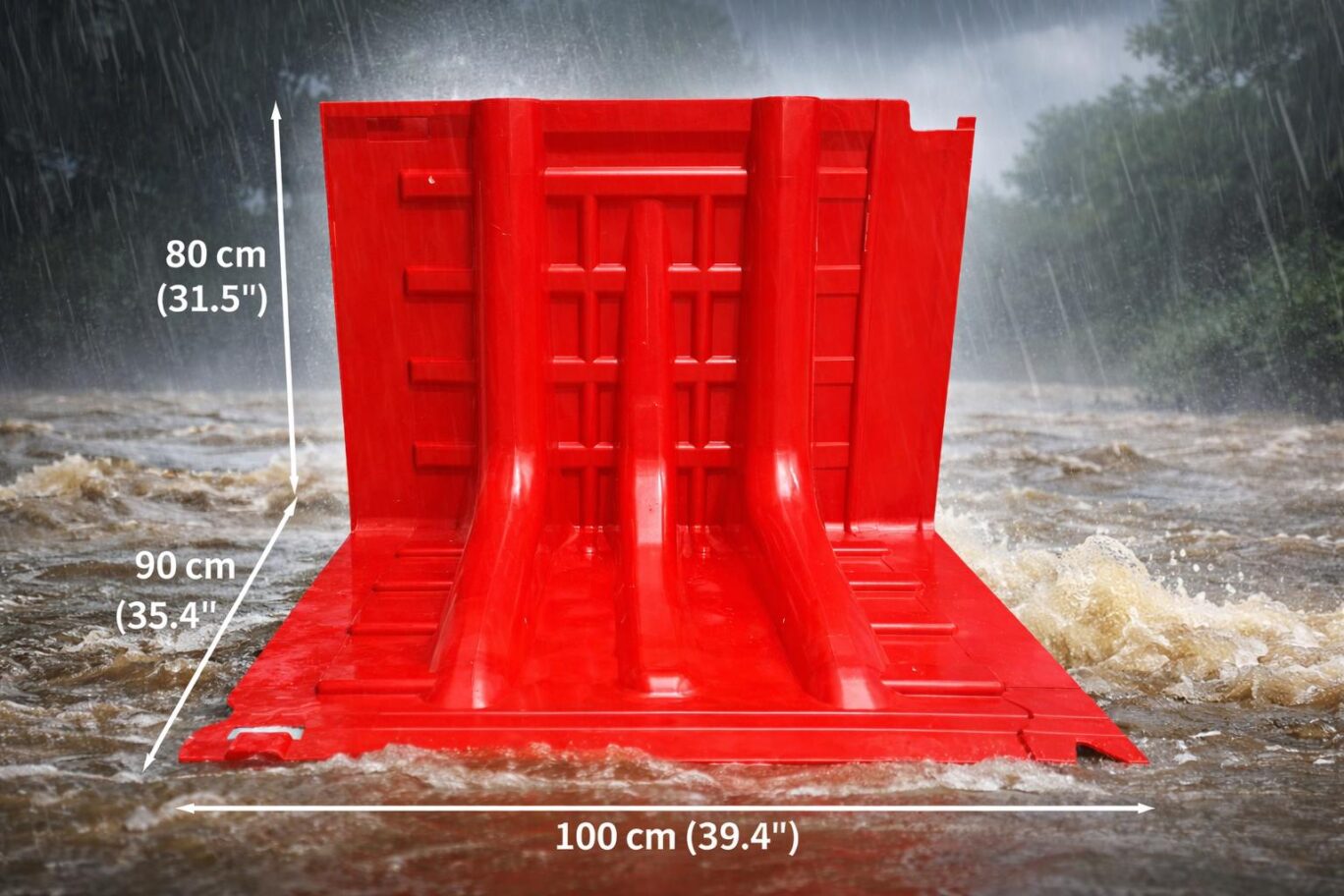
Deployable or temporary flood protection systems have become increasingly popular in homes and businesses. One common solution is panel-style flood barriers, such as aluminum or plastic flood boards. These systems are usually installed at doors or garage entrances, using side rails to hold the panels in place. When needed, the panels can be quickly inserted to create a water barrier. Their advantages include strong structure, reusability, and minimal impact on building appearance when not in use.
It is important to note that some temporary flood protection recommendations are mainly designed for residential environments. For commercial warehouses, retail entrances, or large openings, stronger and more stable flood barrier systems—such as reinforced metal flood panels—may be necessary to ensure reliable protection during higher water levels.
Step 3. Understand Key Technical Parameters of Flood Water Barriers
When selecting a specific flood barrier product, understanding the type of barrier is not enough. You also need to consider several key technical factors that determine the system’s actual protection performance.
1. The first important factor is protection height and water pressure.
Simply put, the higher the water level, the greater the pressure on the barrier. Therefore, flood protection systems are usually designed based on historical flood data, with an added safety margin to handle extreme weather conditions.
2.The second factor is opening size and structural design.
Different doorways, garage entrances, or warehouse openings require different structural strengths. Generally, the wider the opening, the greater the pressure the barrier must withstand. For larger openings, stronger systems or additional structural support may be required to ensure stability.
3.Another key factor is installation method and sealing performance.
Another key factor is installation method and sealing performance. A flood water barrier must not only block water but also maintain a reliable seal against the surrounding structure. Concrete or brick walls typically provide stronger installation support, while wooden or older structures may require additional reinforcement. The durability of sealing materials is also important, as seals may wear out or deteriorate over time.
Step 4. Understand Flood Water Barrier Regulations, Costs, and Return on Investment
When choosing a flood protection solution, it is important to consider not only the product itself but also regulatory requirements, overall costs, and long-term value.
First, understand local regulations and permits.
In some areas, installing permanent flood protection structures—such as flood walls or large flood gates—may require consultation with local planning or building authorities.
Second, consider the total cost, not just the product price.
A complete flood protection system may include equipment purchase, installation, maintenance, storage, and staff training costs. For example, some temporary flood barriers may have lower purchase costs but require significant labor during deployment. On the other hand, more robust systems may involve higher upfront costs but offer greater convenience and reliability over time.
Finally, consider the potential return on investment.
Flood damage often costs far more than the installation of flood protection systems. Damage to building structures, equipment repairs, inventory losses, and business interruption can result in significant financial losses. Installing appropriate flood protection in advance can help reduce these risks. In some regions, effective flood protection measures may even lead to lower insurance premiums.
Step 5. Flood Water Barrier Proper Installation, Maintenance, and Emergency Preparation
Even the best flood barrier will not perform effectively if it is installed or maintained improperly. Proper installation, routine maintenance, and emergency preparedness are all essential for long-term reliability.
1. Professional installation is highly recommended.
Many flood barrier systems must be securely fixed to walls or floors and rely on proper sealing to prevent water intrusion. If installation is not done correctly, leaks or structural instability may occur.
2.Regular maintenance and inspection are also important.
Regular maintenance and inspection are also important. Flood barriers may not be used frequently, but they should still be checked periodically. This includes cleaning tracks, inspecting seals, and ensuring that all components are functioning properly.
3. Finally, it is important to conduct basic emergency preparation and training.
If the system requires manual installation—such as removable flood panels—staff or residents should understand how to deploy it quickly. Businesses and warehouses can train employees to follow deployment procedures and prepare simple emergency contact lists and response plans.
FAQ About Flood Water Barriers
Are flood barriers permanent or temporary?
Flood barriers can be either permanent or temporary depending on the design. Permanent systems, such as flood walls or flood gates, are built as part of a building’s structure and provide long-term protection. Temporary flood barriers, such as removable flood panels, can be installed quickly when flooding is expected and removed or stored when not in use.
What are the best flood barriers?
The best flood barrier depends on the type of building and the level of flood risk. For residential properties, removable flood panels and door flood barriers are often practical and easy to install. For commercial buildings or locations with higher flood risks, reinforced metal flood barriers or permanent flood protection systems may provide stronger and more reliable protection.
Do flood barriers actually work?
Yes, flood barriers can be effective when they are properly installed and used in suitable conditions. They are commonly designed to protect building openings such as doors, garages, and basement entrances. Their effectiveness depends on proper installation, reliable sealing, and selecting a barrier height that matches the expected flood level.
What can I use instead of sandbags for flooding?
Modern flood protection solutions can often replace traditional sandbags. Examples include removable flood panels, modular flood barriers, and water-filled flood barriers. These options are typically easier to install and reusable, and they may provide better sealing against water compared with sandbags.
What are the disadvantages of flood barriers?
Although flood barriers can provide effective protection, they also have some limitations. Temporary barriers require installation before flooding occurs, which means preparation is necessary. Some systems may also involve higher upfront costs or require maintenance. In addition, if floodwater rises above the barrier height, water may still enter the building.
Are flood barriers a good investment?
Flood barriers can be a worthwhile investment, especially in areas that experience frequent flooding. The cost of installing flood protection is often much lower than the potential damage caused by flooding, including building repairs, equipment damage, and business interruption.
Can homeowners install flood barriers?
Yes, many flood barrier systems are designed so homeowners can install them themselves. Removable flood panels and temporary flood barriers can usually be installed quickly using simple mounting rails. However, larger or permanent flood protection systems may require professional installation to ensure proper sealing and structural stability.
Conclusion: Choosing the Right Flood Water Barrier is a Strategic Decision
Choosing the right flood barrier is not simply about buying a product. It is a strategic decision that requires considering multiple factors, including flood risks, protection priorities, barrier types, technical parameters, costs, and long-term maintenance.
Different buildings and environments require different solutions. Residential entrances may benefit from removable flood panels, while commercial facilities may require stronger flood protection systems.